  • IETF email infrastructure transition planned for 11 September

    A transition to a new modern, modular, and containerized infrastructure for email services provided for ietf.org, iab.org, irtf.org, rfc-editor.org (including email lists) is scheduled for 11 September 2026 starting at 2200UTC, with message delivery delayed up to 60 minutes. Further updates will be provided closer to the transition.

    28 Aug 2026
  • Post-Quantum Authentication: Up Next

    Post-quantum key establishment has moved from standards into deployment. Post-quantum authentication has not moved nearly as far, and specification work is no longer the only constraint. The IAB is holding a workshop in Prague on 11 and 12 October 2026 to bring deployment experience together with the people working on the relevant protocols and standards.

    27 Aug 2026
  • IETF 126 post-meeting survey: what we heard

    The IETF 126 Vienna meeting was held 18-24 July 2026 and the results of the post-meeting survey are now available.

    27 Aug 2026
  • Meet our new IETF NOC Lead

    Joe Clarke has been appointed as the new IETF NOC Lead and in this post Joe introduces himself and sets out his priorities for the IETF Network.

    10 Aug 2026
  • Secretariat restructuring and staffing update

    There have been a few changes in IETF Administration LLC staffing since January of this year (2026) including the recent insourcing of the Secretariat, which are summarised here to give an overall view of the staffing structure.

    30 Jul 2026

Filter by topic and date

Filter by topic and date

Hacking

31 Oct 2015

The Yokohama IETF Hackathon is now in progress!
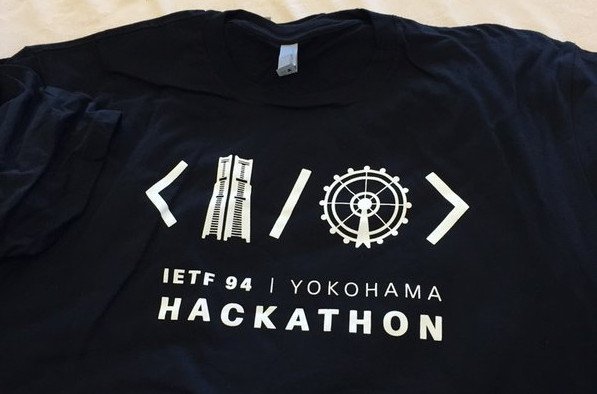
IETF Hackathon Yokohama T-shirt

There is a bit less people than in the previous one, but still a good turnout, and a good number of exciting projects:

  • IPv4 configuration through DHCPv6 (per RFC 7341)
  • Improving privacy through DPRIVE. Currently, DNS queries leak a lot of metadata information to access networks, even if actual communications are secure.
  • Home networking on IPv6, and the ability to support multiple home routers, multiple interfaces, and so on. Building new solutions on top of the HOMENET working group’s work.
  • Intent-based network modelling, generating network configuration from high level descriptions of what applications need, without the applications having to configure specific nodes or paths.
  • Building tools to test the myriad of configurations that ICE allows.
  • Data-based network control with I2RS, NETCONF, and YANG. Also building tools to help analyse and verify YANG models across IETF and other standards organisations and open source projects.
  • Improving Daala video codec.
  • Building information-centric networking on top of link layers directly, running on very small devices and the RIOT operating system.
  • Building support for Service Function Chaining (SFC), allowing complex or simple services to be built from network components in a flexible manner.
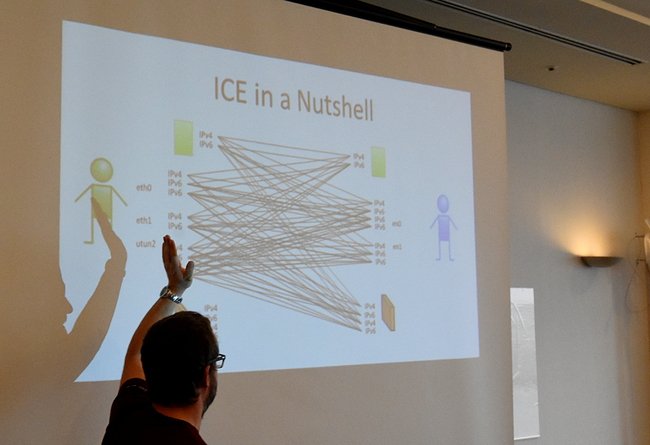
IETF Hackathon Yokohama presentation
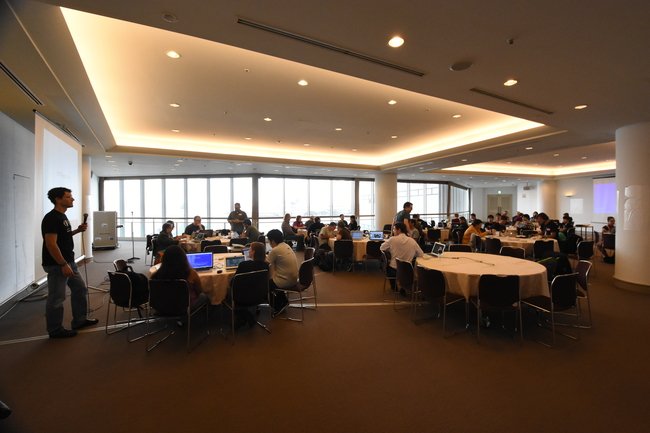
IETF Hackathon Yokohama room

I’m very excited to see the results of these projects tomorrow Sunday! I also wanted to thank Charles Eckel for running the show and Cisco DevNet for sponsoring the event!

(Photo credits Terry Manderson and Jari Arkko)


Share this page